Come by the Holland Land Office Museum and check out our new mini-exhibit, "St. Joesph's Drum Core: 53 Years Later!"
From April to the end of September, view photographs, uniforms, and other artifacts relating to the nationally ranked local drum corps from the twentieth century!
Beginning in 1931 under the direction of Rev. T. Bernard Kelly, pastor of St. Joseph's Church in Batavia, the St. Joseph's Drum Corps was created and went on to be nationally ranked. Winning 8 New York State American Legion titles and other national titles! The drum crops were active until 1971. However, they have a reunion corps called the "Mighty St. Joe's" in Le Roy.
The exhibit includes uniforms, photographs, instruments, and much more of members of alumni of the Drum Corps.
The mini-exhibit is available during regular museum hours, Tuesday-Saturday 10 a.m. - 4 p.m. with regular admission. Come and check it out on your next visit to the Holland Land Office Museum.
The Holland Land Office Museum is proud to announce the next edition of its Guest Speaker Series. On Wednesday, May 1 at 7 p.m., we welcome Buffalo author John Zach as he shares his latest book, "Built to Burn: The Cleveland Hill School Fire." Admission is $5 or $3 for museum members. Please contact the museum at 585-343-4727 or hollandlandoffice@gmail.com if you plan to attend.
“Built to Burn,” tells the story of the tragic 1954 Cleveland Hill school fire in Cheektowaga, the worst school fire in New York State History. Fifteen children died, sixteen were burned, many critically. Three adults were also injured, one with life-threatening injuries. The cause of the flash fire was never officially blamed on one particular person. The book, however, suggests and tells otherwise. The narrative captures the lives of many of the survivors including one youngster who would later rub elbows with Elvis Presley, Paul Simon, and Art Garfunkel and be inducted into the Buffalo Music Hall of Fame. The release of my book coincides with 70 years marking the fire, on March 31."
"This project is made possible with funds from the Statewide Community Regrant Program, a regrant program of the New York State Council on the Arts with the support of the office of the Governor and the New York State Legislature and administered by GO ART!"
The Holland Land Office Museum is proud to announce the next edition of its Concert Series on Friday, May 3 at 7 p.m. Bart Dentino will be playing an acoustic selection of music that will include original compositions and songs by such artists as James Taylor, Gordon Lightfoot, The Beatles, and others. Bart was twice selected Best Performer and Best Vocalist of the Year by Freetime Magazine. It was the first time in the magazine’s history an artist was selected in two individual categories. Admission is $5 or $4 for museum members. Please contact the museum at 585-343-4727 or hollandlandoffice@gmail.com if you would like to attend.
"This project is made possible with funds from the Statewide Community Regrant Program, a regrant program of the New York State Council on the Arts with the support of the office of the Governor and the New York State Legislature and administered by GO ART!"
Join us at the Holland Land Office Museum for the next edition of our Trivia Night @ the Museum on Thursday, May 8 at 7 p.m. In honor of the end of World War II in Europe, our topic will be the 1940s sometimes called "The Flying Forties." Admission is $5 or $3 for museum members. Please contact the museum at 585-343-4727 or hollandlandoffice@gmail.com if you would like to attend.
The Holland Land Office Museum is proud to present the next edition of our Guest Speaker Series. On Wednesday, May 15 at 6 p.m., the museum welcomes Derrick Pratt of the Erie Canal Museum. We will be presenting "The Center of It All: Baseball on the Erie Canal."
"Discover the Erie Canal’s many connections to the earliest days of professional baseball, told through the stories of some of the game’s biggest stars and others long forgotten." Admission is $5 or $3 for museum members. Please contact the museum at 585-343-4727 or hollandlandoffice@gmail.com if you would like to attend.
"This project is made possible with funds from the statewide Community Regrant Program, a regrant program of the New York State Council on the Arts with the support of the office of the Governor and the New York State Legislature and administered by GO ART!"
The Holland Land Office Museum is proud to announce the next edition of our Java with Joe E. series on Thursday, May 23 at 9 a.m. We welcome back Genesee County Historian Michael Eula as he shares snippets from his new book on the history of Genesee County "Historic Chronicles of Genesee County." Copies of the book will be available for $24.99, and Michael will be signing copies. Admission is free with coffee and pastries.
"The dramatic events of American history have left an indelible mark on the life and culture of New York's Genesee County. The Cold War threat of nuclear destruction led to local preparedness drills in the 1950s, and Genesee classrooms and homes were not spared. Social movements, the Great Depression and New Deal-era policies reshaped how residents viewed the role of government in county life. Genesee women led the charge for women's suffrage in the twentieth century and helped forge new opportunities for female roles in work and public life. Historian Michael J. Eula presents a variety of historical essays from throughout Genesee County's past and shows how the nation's story unfolded from Batavia to Bergen."
Java with Joe E. is sponsored by Pub Hub Coffee for 2024.
Join us at the Holland Land Office Museum for the next edition of our Trivia Night @ the Museum on Thursday, April 11 at 7 p.m. In honor of the birthday of J. Robert Oppenheimer, our topic will be the Manhattan Project. Admission is $5 or $3 for museum members. Please contact the museum at 585-343-4727 or hollandlandoffice@gmail.com if you would like to attend.
The Holland Land Office Museum is proud to announce the next edition of our Guest Speaker Series. On Thursday, April 18 at 7 p.m. we welcome avid bike rider and cycling historian Karen Lankeshofer, as she presents on Elsa Von Blumen, who first became a professional “race walker” in 1879 and was soon enticed to try high-wheel bicycle riding by bicycle manufacturer Albert Pope. She was a prominent figure on the bicycle-racing scene in the 1880s and competed throughout the Eastern United States ( including in Batavia). Admission is $5 or $3 for museum members. Please contact the museum at 585-343-4727 or hollandlandoffice@gmail.com if you would like to attend.
"This project is made possible with funds from the Statewide Community Regrant Program, a regrant program of the New York State Council on the Arts with the support of the office of the Governor and the New York State Legislature and administered by GO ART!"
The Holland Land Office is proud to announce the next edition of our Java with Joe E. On Thursday, April 25 at 9 a.m., Don Burkel will be presenting, “Who Was Philemon (Phil) Tracy & What Is He Doing Here?” With the use of personal letters and photographs, a PowerPoint program will provide an in-depth look into Philemon Tracy and his family. Philemon Tracy was a Major in the Confederate Army from Georgia who is buried in the Historic Batavia Cemetery. Admission is free with coffee and pastries. Java with Joe E. is sponsored by Pub Hub Coffee for 2024.
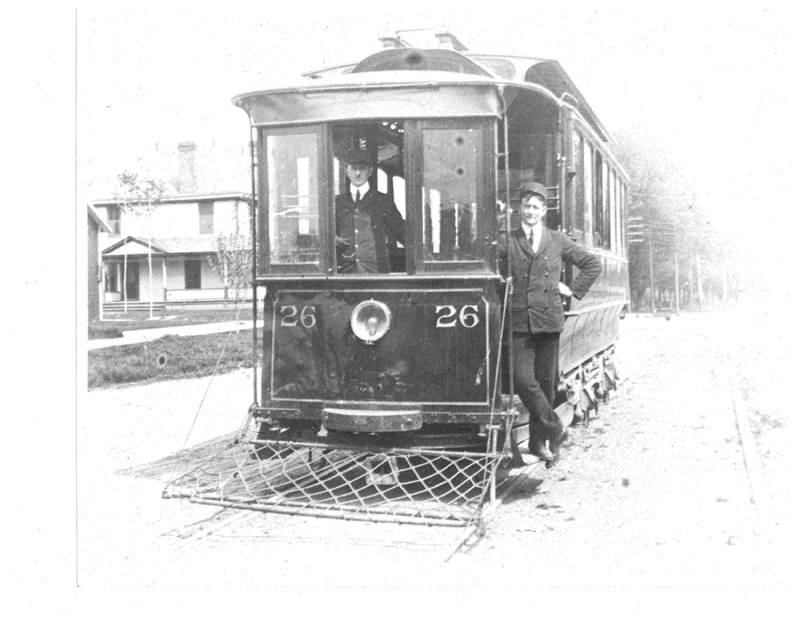
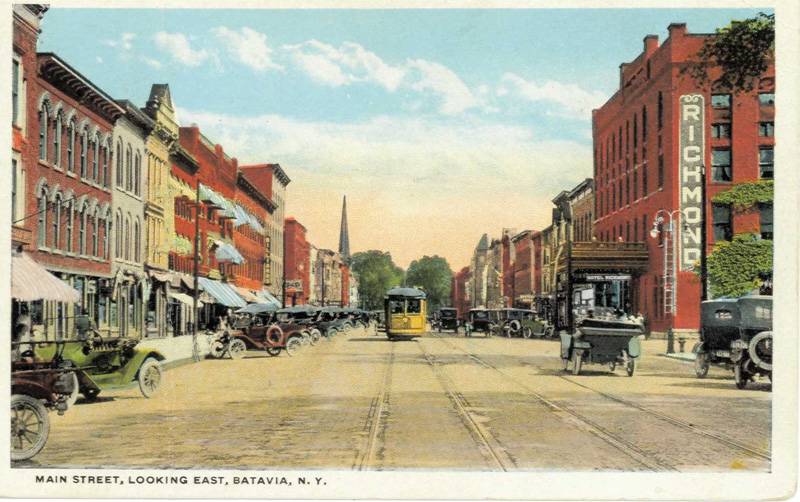
A trolley car with conductors that ran the length of Main Street from 1903-1927. Submitted photo.
Much of Batavia’s growth in the nineteenth and early twentieth century can be attributed to its location as a hub of major transportation systems. This was particularly evident with the passage through the Batavia of several major railway lines.
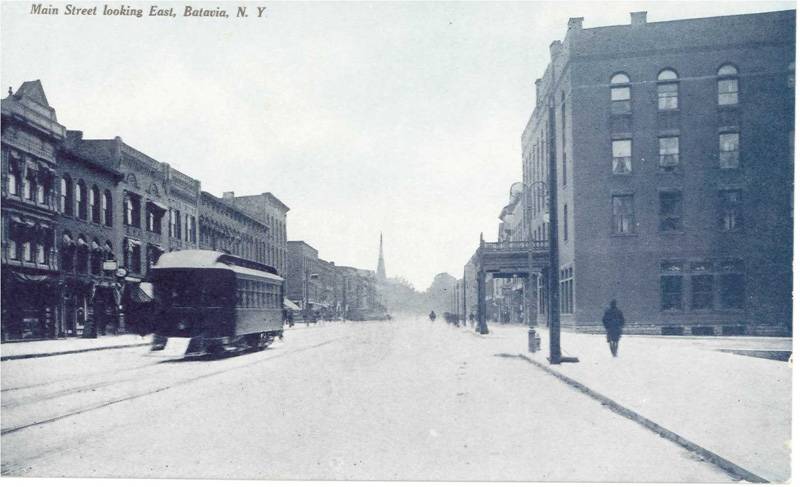
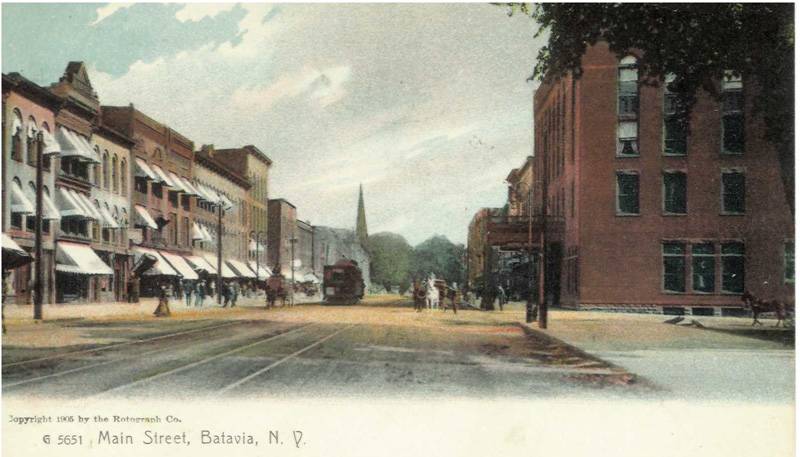
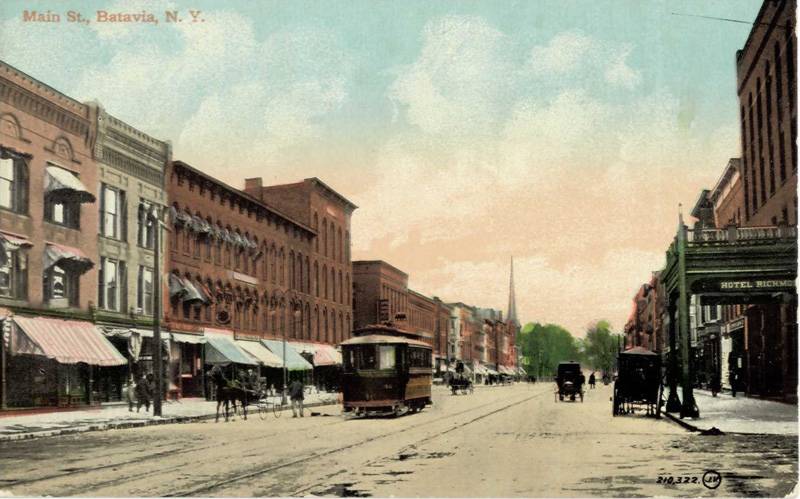
However, another form of rail transportation through the heart of Batavia, though it existed only for two dozen years, left an impact upon first the village and then the city. The trolley line that ran the extent of Main Street was built as a precursor to Batavia's continued growth and to connect it further to the rapidly growing cities of Buffalo and Rochester at the dawn of the twentieth century.
The trolley line in Batavia was completed in 1903, though it was originally just a small piece of a much larger line.
The Buffalo and Williamsville Company, who built the line, had plans for a line running from Williamsville and Depew to Rochester. They even had talks with investors of further expansion to Medina or Horseshoe Lake, and eventually across New York State. However, the Batavia Main Street line is all that would come to pass.
The trolley was a single track that ran a mile and a half from Clinton Street to the intersection of West Main Street and Lewiston Road. A turnout was also built near Bank Street to allow the trolley cars to pass each other. It officially opened on September 2, 1903, with many of the village aldermen as its first riders. It quickly became the latest marvel in Batavia, and people flocked to ride the trolley, with reports of 3,300 people to board at some point during the first week.
The trolley line's local patrons would soon have issues with its builder, the Buffalo and Williamsville Company.
Though the line had a large number of riders, very little was done to improve the equipment or the quality of the ride.
In 1911, East Main Street residents complained about the noise of the trolley cars, and many riders were less than thrilled with the uncomfortable seats on board. By this point, no effort had been made to add a second line. When some expansion began in 1912, the village aldermen asked the company to pave Main Street, which was never resurfaced after the line was finished. The village officials believed that this was the company’s responsibility.
The disagreement over the paving of Main Street became increasingly hostile. When pressured, the company hinted that they would just close the line altogether. The company would attempt to make good on their threat by applying for a permit to close the trolley line. In response, a commission of local men, including George Wiard and K.B. Mathes, sought out other entities to run it. In 1914, they found a potential buyer in the Storage Battery Company of New York City, but it was deemed soon after that it would be more beneficial if the line was owned and operated by a local company.
A year later, the Batavia Traction Company was created to undertake such a venture. Though the trolleys still ran for another twelve years, there were never funds to make the necessary improvements.
By 1927, the company was losing money, and the whole line was deteriorating beyond repair.
Trolleys were becoming obsolete, replaced by buses, and there was little outside interest in keeping the cable cars going. By the end of the year, the trolley line on Main Street ceased to take Batavians to and from.
Some of the tracks were dug up during the scrap drives in 1943; another part was covered by blacktop in 1947, while the tracks along East Main Street were still there until Route 5 was rebuilt in the 1960s.
The Holland Land Office Museum is proud to announce its Garth Swanson Memorial Scholarship for 2024. This scholarship was created in honor of Garth Swanson, who was the Stafford Town Historian, a History professor at Genesee Community College, and a former board member and officer of the museum.
This $500 scholarship is open to any graduating senior in Genesee County planning on attending Genesee Community College, or current student attending Genesee Community College, and has expressed interest in history, or plans on working in the history field in the future.
Completed applications should be mailed or emailed no later than May 1. They can be emailed to Ryan Duffy at duffyhollandlandoffice@gmail.com. Or Mailed to Ryan Duffy, Executive Director, Holland Land Office Museum, 131 W. Main St., Batavia.
The application is available on both the museum’s website and Facebook page. You can also contact the museum for the application or further information.
The Holland Land Office Museum is proud to announce the next edition of our Guest Speaker Series on Tuesday, March 12, at 7 p.m. We welcome Michael McBride, who will share his personal journey as he unravels his research into the fascinating story of his great uncle: internationally known Irish freedom fighter and Buffalo's forgotten human rights crusade, John Joseph "Exile" McBride. "Exile" McBride left Ireland, joining the Fenian Movement, but eventually came to dine with Presidents and Prime Ministers and was even present at the Holland Land Office dedication in 1894. Admission is $5 or $3 for museum members. Please contact the museum at 585-343-4727 or hollandlandoffice@gmail.com.
"This project is a regrant program of the New York State Council on the Arts with the support of the office of the Governor and the New York State Legislature and administered by GO ART!"
Join us at Holland Land Office Museum for the next edition of our Trivia Night at the Museum on Thursday, March 14 at 7 p.m. In honor of Women's History Month, our topic is Famous Women of History. Admission is $5 or $3 for museum members. Please contact the museum at 585-343-4727 or hollandlandoffice@gmail.com if you would like to attend.
The Holland Land Office Museum is proud to welcome back No Blarney for our St. Patrick's Day tradition, as they play all your favorite Irish music tunes from throughout the years. The concert will be Friday, March 15, from 7-9 p.m. Admission is $5 or $4 for museum members. Please contact the museum at 585-343-4727 or hollandlandoffice@gmail.com. Seating is limited to reserve your spot early.
"This project is made possible with funds from the Statewide Community Regrant Program, a regrant program of the New York State Council on the Arts with the support of the office of the Governor and the New York State Legislature and administered by GO ART!"
The Holland Land Office Museum is proud to announce the next edition of its Guest Speaker Series on Thursday, March 21 at 7 p.m. We welcome Buffalo author and historian Julianna Woite, who shares her most recent work, a historical novel, "Our Invisible String: a year-long journey through the stages of forbidden love," set in Buffalo in 1957. It follows the teenage love affair of 16-year-old Josie Johnson and her "test of character and her ability to find beauty between the lines." Copies of the book are available for sale for $15. Admission is $5 or $3 for museum members. Please contact the museum at 585-343-4727 or hollandlandoffice@gmail.com if you want to attend.
"This project is made possible with funds from the Statewide Community Regrant Program, a regrant program of the New York State Council on the Arts with the support of the office of the Governor and the New York State Legislature and administered by GO ART!"
Join us at the Holland Land Office Museum for the next edition of our Java with Joe E. morning coffee series on Thursday, March 28 at 9 a.m. Our Curator, Tyler Angora, will be sharing the history of bridal fashion throughout the eras of the 19th century. The presentation will also feature examples from the museum collection. Admission is free with pastries and coffee. Reservations are required; please contact the museum at 585-343-4727 or hollandlandoffice@gmail.com to reserve your spot. We want to thank Pub Coffee Hub for sponsoring Java with Joe E. for 2024.
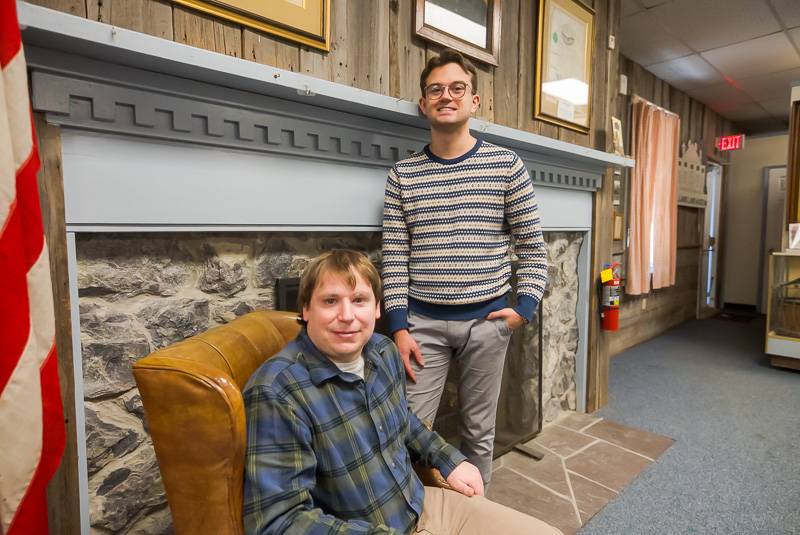
Holland Land Office Museum Executive Director Ryan Duffy, left, and Curator Tyler Angora. Photo by Howard Owens
NOTE: This week, The Batavian is highlighting the annual Chamber of Commerce Award winners with a story daily through Friday. The awards dinner is Saturday evening at Batavia Downs.
Perhaps an 11-year-old Ryan Duffy could have predicted that he’d be championing the preservation of valuable artifacts and would be involved somehow in the back stories of how historical exhibits and programs came to be presented to the public.
“I always leaned toward that, and then we went to Gettysburg that cemented it. I saw the park rangers giving tours. The seed was there that made it a reality; it wasn’t just about learning the facts; it was something you could actually do. I’ve been directing myself toward that from then on,” Duffy said.
Chosen in 2017 as executive director of Holland Land Office Museum, Duffy has now been named on behalf of the museum for the Chamber of Commerce Special Recognition of the Year Award. He shared the credit with Curator Tyler Angora, who has zealously bitten off the entire museum collection to sort through and organize for a multitude of exhibits now and into the future.
Duffy’s folks are well aware of his own enthusiasm for the job, and they have visited the site at 131 West Main St., Batavia “many times,” he said. They are the ones that got the ball rolling by taking him on that family trip to Pennsylvania to the famous Gettysburg National Battlefield and National Military Park, with a museum and visitor center, Civil War artifacts and a memorial to mark the site of Abraham Lincoln’s 1863 address.
It was only 21 years later when the Holland Office Museum was established; it celebrates a 130-year birthday this year. Back when Duffy was hired, the museum had come to a standstill, which meant handing him the keys to drive it wherever he could imagine.
“It was kind of a blank slate. We were starting from scratch, putting new energy and new programs into it,” he said. “It was waiting for a new perspective. One of the first things I tried differently was a regular guest speaker series and trivia nights. It took a little time to build an audience up.”
Other programs were Java Joe, concerts, Murder Mystery Dinner Theater, and taking the show on the road, so to speak, as Duffy and some board members have visited groups upon request to share what’s happening at the museum and talk about local history.
Did everything take off immediately? It did take a while to “get our name out there,” he said, and build up a customer base. But then that base began to spread out to Rochester, Buffalo, and even farther out to Syracuse.
“It was about growing that. People have responded … our audience more than doubled, our overall visitor ship attendance and programming,” he said. “We added about 100 members as well. All of that has kept progressing in the right direction.”
An award nomination stated that the museum’s importance goes well beyond being “just a museum,” and in recent years, it has grown into a full-fledged community center, given all of the activities taking place there.
“This year, Director Ryan Duffy and Curator Tyler Angora have been busy updating the exhibits to breathe even more life into the displays inside the museum. Tyler has brought his youthful energy to bring to life the lives of our predecessors, particularly in the ways they dressed,” volunteer Richard Beatty said, adding that Duffy has extended the museum’s reach by writing columns, producing videos and going into the community with his and volunteers’ presentations.
Duffy did also attempt to reel the antique show back into the fold, holding it at Batavia Downs, however, that darned COVID struck again, ruining yet another event, and “it fizzled out.” Duffy picked his battles and let that one go. “A lot is trial and error,” he said.
Meanwhile, though, he said he feels that the reputation of the museum “has come a long way” as an asset to the community since he took the lead.
“And how people perceive us. Many more people notice us and take notice of us,” he said. “As a director, I’ve taken ownership … I’ve been the frontman; it’s my responsibility to make that happen. I’m very proud to make that happen and where we’re going to go. I’m hoping to continue a lot of progress of … the collection area, grow our outreach and membership. And grow into a wider area and become more of an attraction. Our base is here in Genesee County, but the Holland Land Purchase is all of Western New York.”
That means he’s eyeing from Rochester to Buffalo and down to the southern tier.
“We're definitely seeing an uptick from people coming from areas outside Genesee County, and just our engagement, even if they're not visitors, but looking for research or wanting us to come and talk to them,” Duffy said. “And we get those kinds of calls from as far away as Syracuse, so we are getting our name out there. And that's what we want: the more people who know about us, the more people that will make the trip.”
Angora is planning to complete his master’s degree in history at Brockport State College in spring 2025, and has been full steam ahead since taking on the role of curator in 2023. The museum’s collection hadn’t been a priority up to that point, he said, so he “really took the reins” by organizing the upstairs area and unearthing buried treasures that had been there all along.
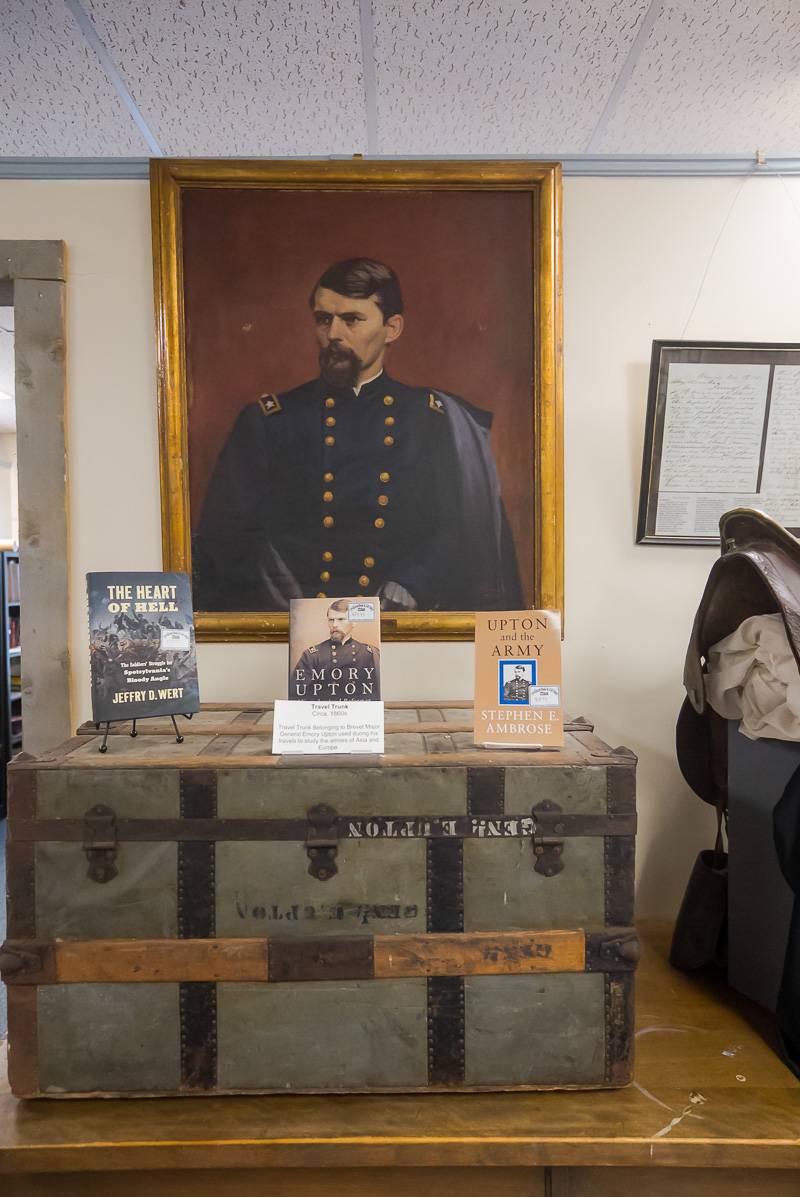
“There’s a clothing collection, Emory Upton items that were donated by his nieces, it keeps growing every day. We added 1,000 objects,” he said. “For the eclipse exhibit, 98 Years Since the Sun Went Out, people are seeing new parts they’ve never seen before.”
A grant has made it possible to digitize the entire 20,000-piece collection so that anyone will be able to view it online. That’s exciting, Angora said, because “it will allow accessibility” to any person with an interest or a research project to go to the museum’s website and view those artifacts for the first time. That should be a reality by the end of summer.
Also, later this year, Angora is hoping to do his long-awaited tours of the entire collection upstairs — a “behind the scenes” sort of take — that he’s been grooming ever since he began.
“It’s been exciting. It's been challenging. It's been everything encompassed in one kind of jar,” Angora said. “But overall, it's been an amazing experience to work with a collection that has so much history and a city and a county that has so much history tied to it that a lot of people don't know about. So being a part of getting people to know that history has been something quite fantastic.”
The work will never end, he said, but that’s a good thing. There are programs to come for the next several months.
Along with those coming months is an eventual expansion of the building on the west end toward the parking lot. A museum study made several suggestions to improve and preserve the old site, one being to add some much-needed space for a gift shop and to extend an exhibit room, Duffy said.
In a nutshell, it’s about “looking good and being sound,” he said.
“Our expansion is looking at accessibility, breathing room, able to show off what we’ve got here for a better visitor experience,” Duffy said. “The county is dedicating funds to deal with the building, and we’re excited and very appreciative of that.
“Well, we're very honored to be recognized by the chamber. It is always a good feeling when people take notice of what you're doing. And especially see it as a positive aspect in the community. We always felt like we were a hidden gem, and it's nice to know that we're not quite as hidden anymore. And that the community appreciates what we do, because it's our first goal is to tell the history of our community,” Duffy said. “Tyler's got a long list planned out for the next few years too, I think, that will be very exciting for everyone. We're growing our partnerships and, with that, trying to create new programming or expand the programming that we currently have.
“And just to be more exciting,” he said. “We’re really working towards making this place, creating a more vibrant atmosphere, a more welcoming atmosphere, that people will want to be here and be a part of what we're doing because we feel that we're on the way to some really big and important things.”
The 52nd annual Genesee County Chamber Awards ceremony will be at 5 p.m. March 2 at Batavia Downs Gaming, 8315 Park Road, Batavia.
Join the Holland Land Office Museum for another Murder Mystery Dinner Theatre. The event will be on Saturday, March 23rd from 6-8 pm at the Batavia Country Club, located at 7909 Byron Rd. in Batavia. Enjoy a great meal from The Lodge at the Country Club and a wonderful show by WNY Improv.
The mystery is "Spirits and Suspects, a Roaring 20’s Murder Mystery." Prohibition may be in full swing but for the Kingpin of Genesee County, the booze business is booming! What could possibly go wrong? Put your glad rags on and join the fun as mobsters, molls, and even a medium, face the eclipse...
Tickets are $75 per person. There is a choice of three entrée options including stuffed chicken with beef, crab-stuffed fish, or pasta primavera. Please make your choice when you purchase your ticket. Your ticket includes your meal and dessert. A cash bar will be available. Links to buy tickets online are available at the museum’s website www.hollandlandoffice.com.
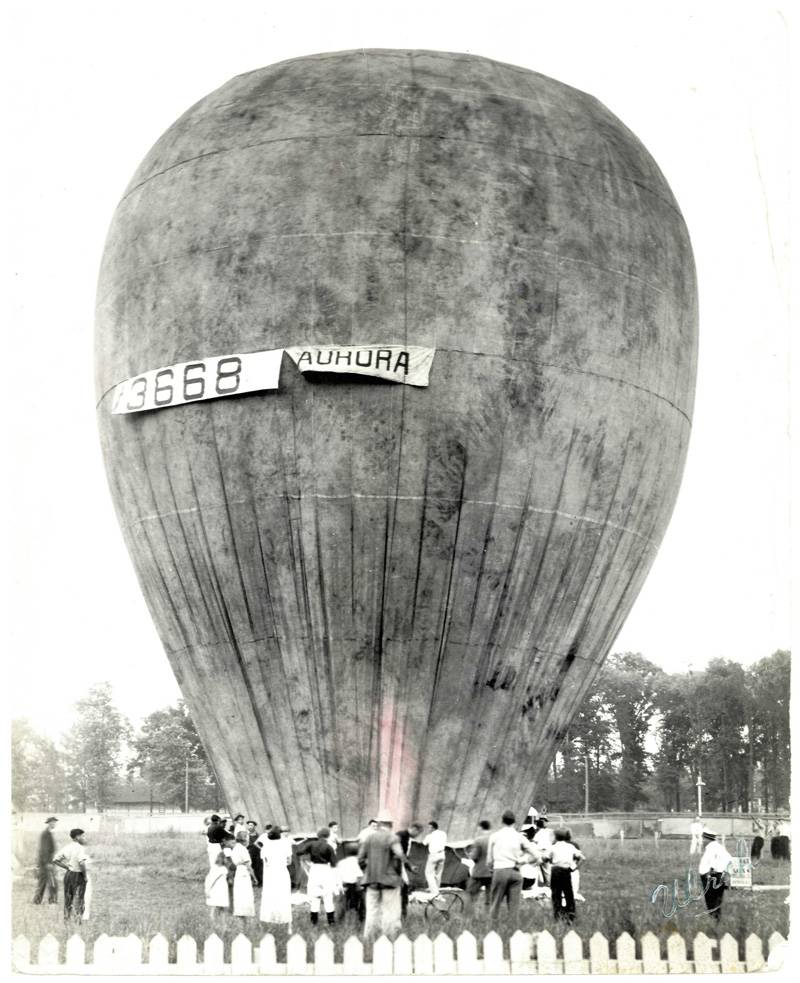
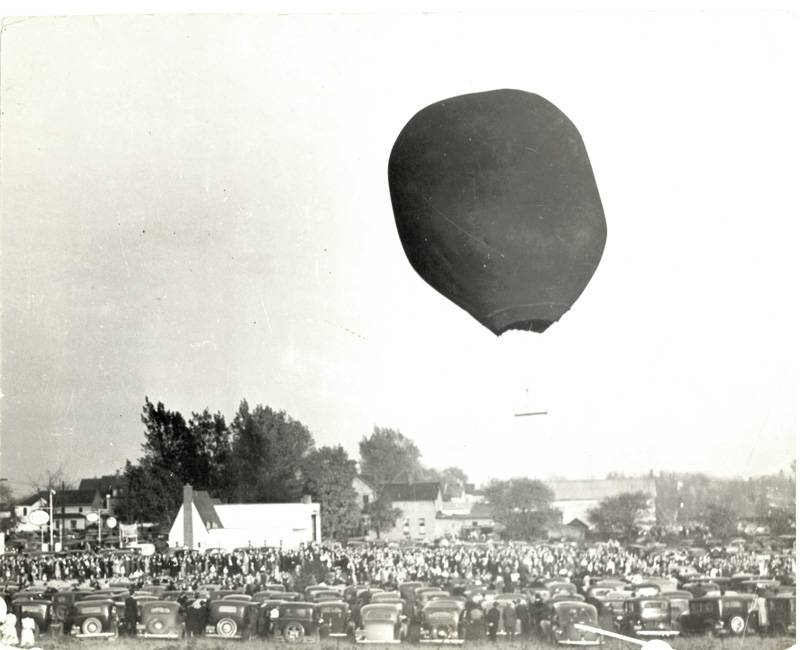
Edwin Allen and his family were known across the United States as the “Flying Allens” and became some of the foremost aerial balloon daredevils throughout the first half of the 20th century. The Allens made their home in Batavia and always came back to Genesee County no matter how far-flung their escapades took them.
Four generations of the Allen family rode in balloons dating all the way back to the Civil War.
While Edwin Allen was the patriarch of the most prolific branch of the “Flying Allens,” the first balloonist was his grandfather, James, who was a balloon observer for the Union Army. All three of his sons became aerial exhibitionists in and around Dansville. Comfort Allen, Edwin’s father, made jumps with his older son Warren, also known as “Speck,” or alone.
Ed and his twin brother Edgar, Red, continued the family tradition beginning when they were only 11 years old. They would ride up in a hot air balloon and then glide down on a parachute while holding onto a crossbar. Their first jump occurred in Lockport. Red’s career would last until 1924, when his balloon burst 200 feet up, and he was injured in the subsequent crash. Ed would continue a solo career until his children were old enough to join the family business.
Ed Allen moved to Batavia in 1926, living on Vernon Avenue, to begin working for the P.W. Minor Shoe Company, and he married Louise Cromwell in 1934.
In 1937 he was promoted to foreman, but he retired from the factory the next year to open a service station at 614 East Main St., which he ran until 1950.
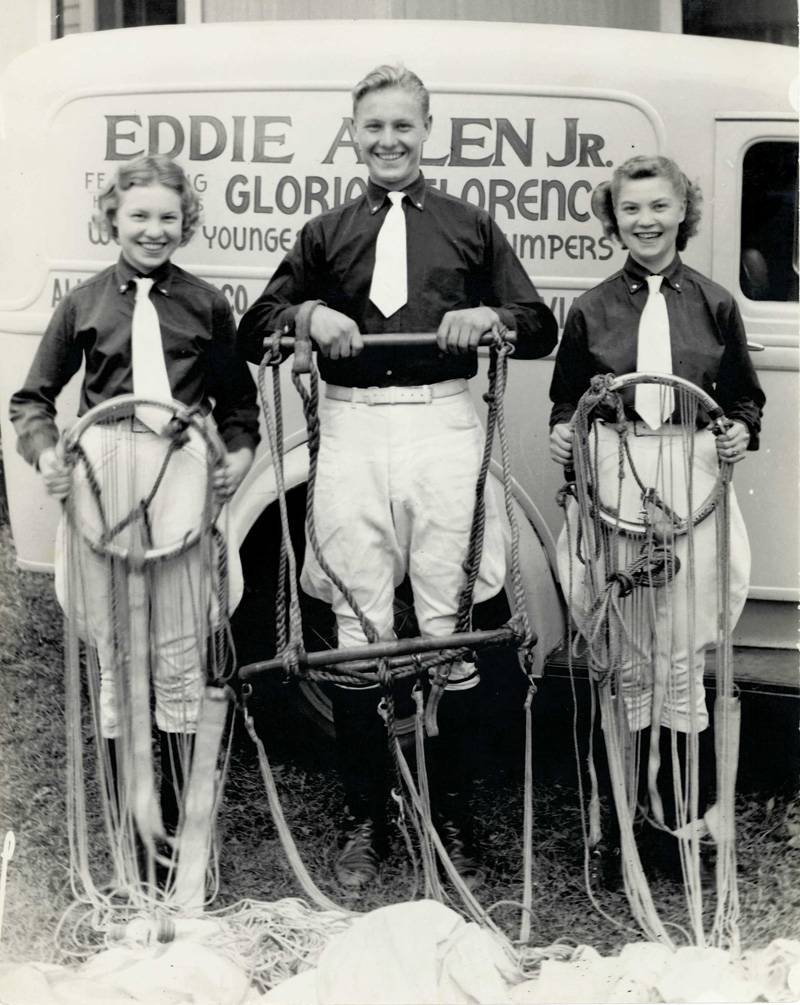
All five of the Allen children would join their father in his ballooning spectacles. Eddie Jr. began jumping at 18, followed by Gloria and Florence. The two eldest daughters were billed as “the World’s Youngest Jumpers” once their careers took off. They marveled at crowds in their white and black outfits as they glided down on their white parachutes.
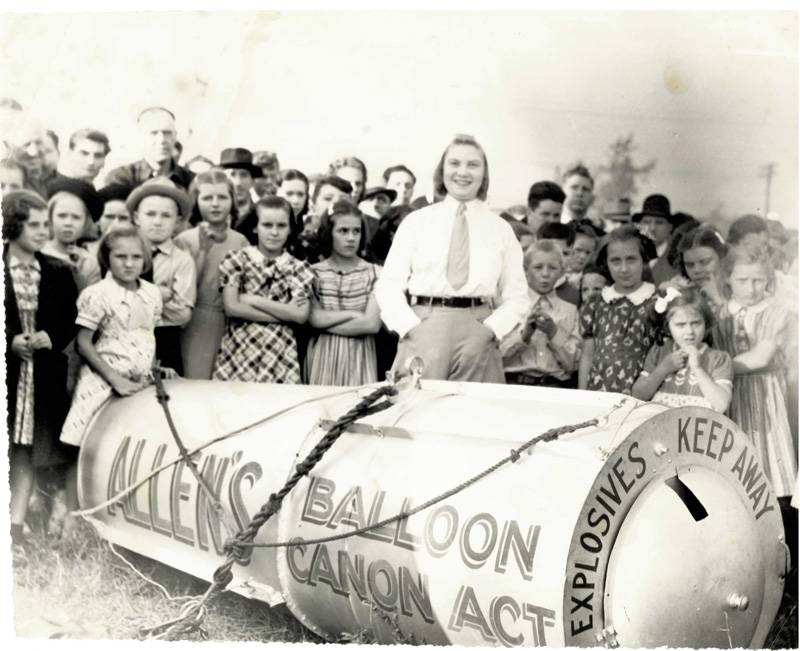
They took their act to another level by being shot from a cannon suspended under the basket of a balloon. The Allens traveled to fairs and carnivals all around the country, though always coming back home to make appearances. Their testing ground was located behind their service station on East Main Street. However, things changed in 1949 when New York State outlawed the performances, forcing “The Flying Allens” to work out of state.
Captain Eddie, as he became known, continued to jump from his balloon until 1965, when he broke his leg during a jump at the age of 70. In 1977, he told reporters that he had made 3,253 jumps in his lifetime.
Captain Eddie still attended balloon rallies regularly and was honored by several regional groups throughout the 1970s but was always proud of being from Batavia.
In 1979 and 1980, The Festival Genesee hosted balloonists from across the United States to honor Edwin Allen for his lifetime of achievements.
The death-defying stunts of the Allen family did not come without their price, as many of the family members suffered serious injuries or worse while performing their feats. Three of the Allen children, Gloria, Joseph, and Arlene, suffered severe injuries and died as a result of accidents involving the performances. Gloria died in 1939 after a very hard landing caused a severe brain injury. Arlene was killed after parachuting into power lines in 1946. Edwin’s nephew, Warren Jr., also was killed during a jump in 1946 when he fell 75 feet from his basket.
Edwin Allen survived his thrilling career and passed away at his home in 1984.
The Holland Land Office Museum welcomes all on Thursday, Feb. 8 at 7 p.m. for our next Trivia Night at the Museum. In honor of President's Day, come and test your knowledge of the Presidents of the United States. Admission is $5 or $3 for museum members.
The Holland Land Office Museum is proud to announce the new exhibit opening “Reimagining History”. It will showcase a redesign of exhibits and exhibit spaces on the bottom level of the original structure of the Holland Land Office. Our permanent exhibit, “The Land Office,” will be presented with a new flow of story and presentation of artifacts.
Also, the opening will showcase the newly revamped and enlarged exhibit, “98 Years Since the Sun Went Out.” In its new location in the old room where The Land Office” used to reside, it will triple in size and truly show what Genesee County looked like back in 1925 when the last total solar eclipse occurred over this area. There will be more history integrated into the exhibit along with many new objects!
On Feb. 9 at 6 p.m. the museum welcomes all to view the new edition of “98 Years Since the Sun Went Out” and of “The Land Office.” You won’t want to miss it!
Leonard Oakes Winery will be providing a wine tasting during the event. If you would like to attend, please contact the museum at 585-343-4727 or hollandlandoffice@gmail.com.
The Holland Land Office Museum is proud to welcome as the first presenter of our 2024 Guest Speaker Series Rick Falkowski on Thursday, Feb. 15 at 7 p.m. Mr. Falkowski is an author and lecturer who has given presentations on several aspects of WNY life and history, will be presenting on his newest book, "The Spirit of Buffalo Women: Prominent Women Who Called WNY their Home." The book highlights the many accomplishments of local women throughout history and their lasting impact on our area. Admission is $5 or $3 for museum members. This project is made possible with funds from the statewide Community Regrant Program, a regrant program of the New York State Council on the Arts with the support of the office of the Governor and the New York State Legislature and administered by GO Art!
Join us at the Holland Land Office Museum for the next edition of our Java with Joe E. morning coffee series on Thursday, Feb. 22 at 9 a.m. This month in honor of President's Day our Director Ryan Duffy will share the many times that a sitting, future, or former President of the United States has visited Batavia and Genesee County, it is more times than you think. Admission is free with pastries and coffee. Reservations are required, please contact the museum at 585-343-4727 or hollandlandoffice@gmail.com to reserve your spot. We want to thank Pub Coffee Hub for sponsoring Java with Joe E. for 2024.
The Holland Land Office Museum is proud to announce the next edition of our Guest Speaker Series on Friday, February 23rd at 7 pm. We are happy to welcome Reverend Jeremai Williams of the Mt. Zion Missionary Baptist Church in Batavia. Reverend Williams will be presenting on the history and importance of the African American church, along with church member Ethal Miles, and his wife Dr. Cassandra Williams. Ethal will be speaking on the beginnings of the church and how things have changed, and Dr. Williams will be speaking on important African Americans in medicine and her own perspective. Admission is $5 or $3 for museum members. Please contact the museum at 585-343-4727 or hollandlandoffice@gmail.com if you would like to attend. This project is made possible with funds from the statewide Community Regrant Program, a regrant program of the New York State Council on the Arts with the support of the office of the Governor and the New York State Legislature and administered by GO ART!
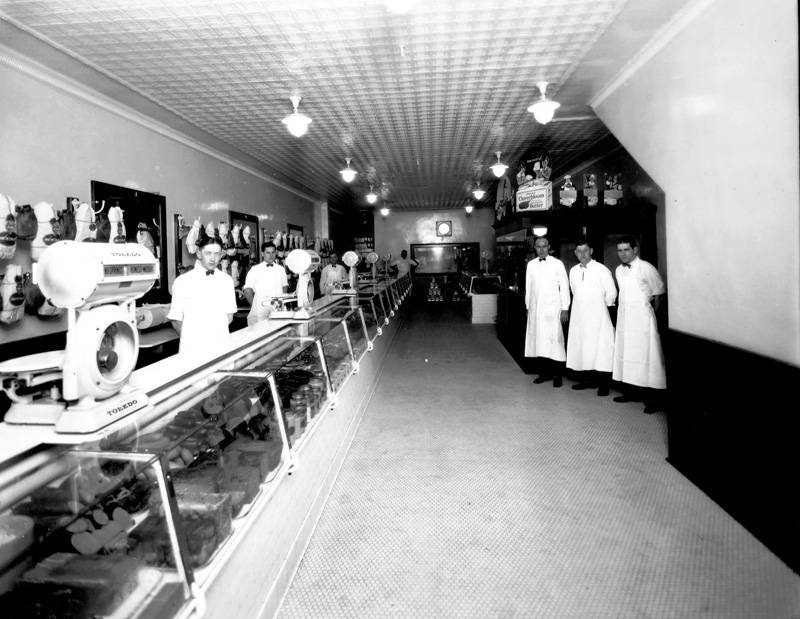
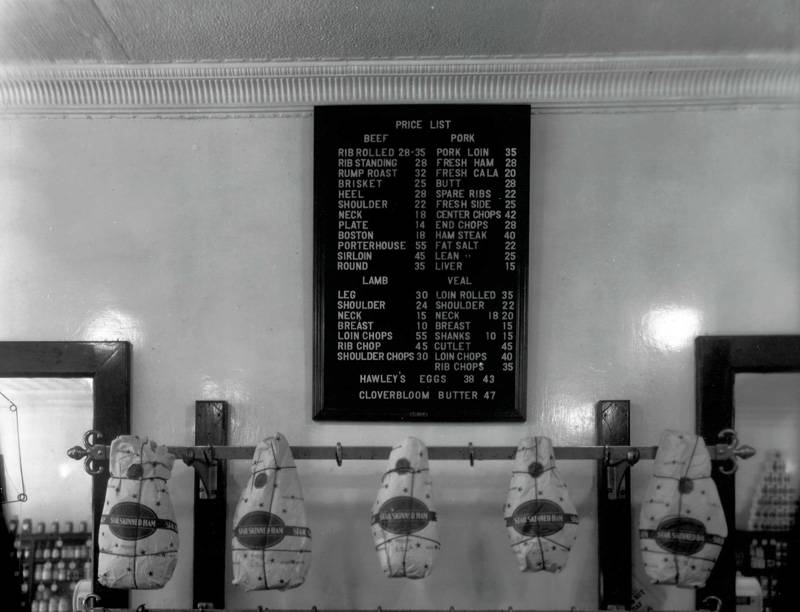
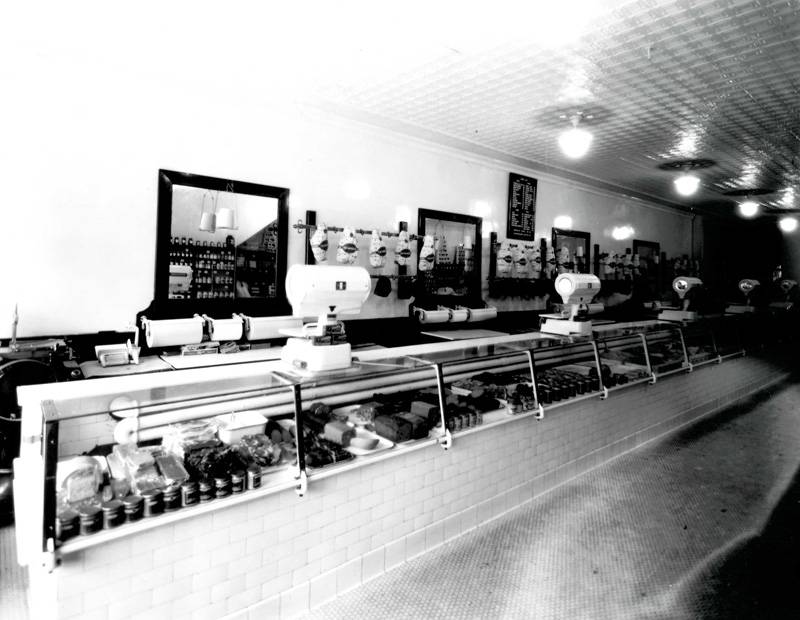
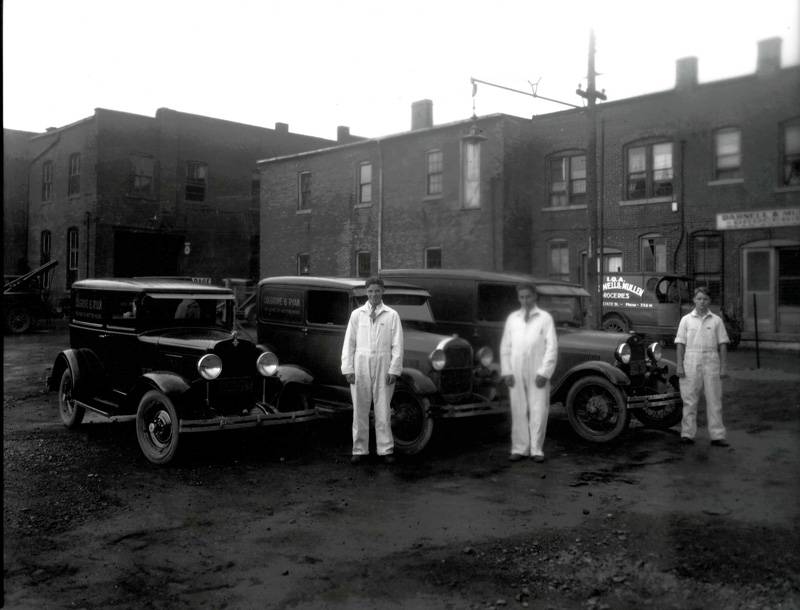
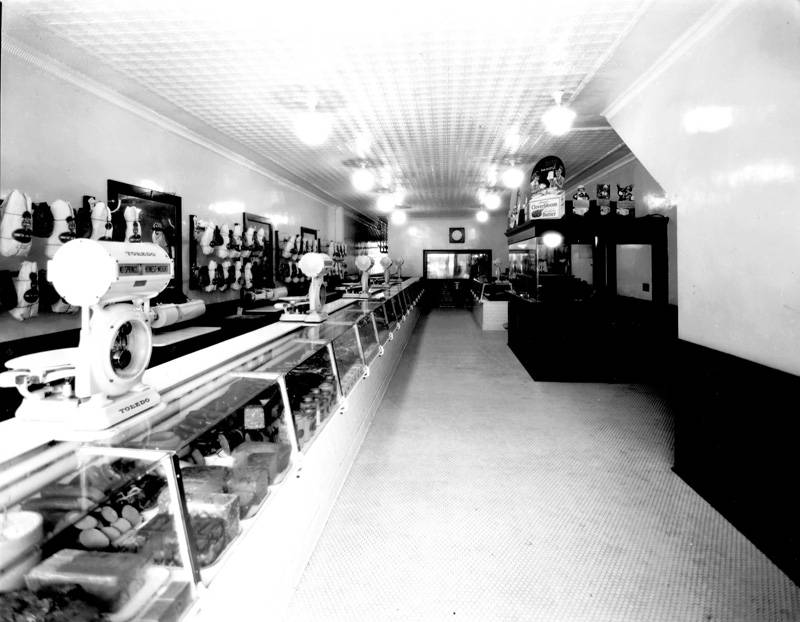
During the first half of the 20th century, most Batavia families purchased their main courses from one source for all their meals big and small, Colgrove and Ryan’s Meat Market.
The store became the preeminent meat seller in the area and even had a wider distribution area. Over its history, it had a few different locations in Batavia and even subsequent generations of stores after the owners went separate ways.
Colgrove and Ryan’s was the brainchild of the partnership of Myron Colgrove and Joseph Ryan. The two were seasoned grocers and meat sellers, coming from other businesses in the area. They began in 1920 and opened their first shop at 10 and 12 State St., which was named The Genesee Market. They stayed at that location until 1926, when they purchased Greentaner’s Sanitary Market at 54 Main St., changing the name to Colgrove and Ryan’s.
This store backed up to the State Street market with a narrow alley in between. Due to the professionalism and expertice of the operation, the business became the go-to spot for grocery and meat shoppers.
Adding to what the customers wanted, Colgrove and Ryan added a line of groceries in 1930, though their meat products were still their claim to fame.
The store was also an early pioneer in telephone ordering, as people could order from their homes and pick them up at the market. In the fall of 1926, the store was featured in the magazine “Meat Merchandising” in an article, which commended them for the store lighting and the noted telephone service.
Around 1945, Colgrove hinted at buying out his partner, but in turn, it was Ryan who bought out Colgrove. Under his singular ownership, Ryan turned the Main Street store into a wholesale meat center called The Western Provision Company. The operation grew quickly, and by 1949, he had several countermen and office clerks, as well as two order clerks, a receiving clerk, two sausage makers, and several delivery boys with a fleet of trucks.
Colgrove took his business back to 12 State St. and reopened The Genesee Market. The Genesee Market remained open until the building was bought during Urban Renewal, which was the same time that Myron Colgrove retired. He passed away in March 1966 at the age of 72.
Joseph Ryan would fight in World War II and would suffer from the aftereffects of a sulfur gas attack for the rest of his life. At the time of his passing in 1960, he was not only the head of the Western Provision Company but also the treasurer of WBTA and the Batavia Baseball Club and a partner in the Ryan-DeWitt Oil Distribution Company.
Western Provision Company was bought first by John Byrne of Niagara Falls and then by Harold Ironfeld before it was also closed due to Urban Renewal.
Ryan Duffy is the director of the Holland Land Office Museum.
The Holland Land Office Museum will be closed to the public in January from Tuesday, Jan. 2 through Saturday, Jan 27. The staff and volunteers of the museum will be working on getting the museum ready for a brand-new year in 2024 full of new exhibits, displays, programs, and special events.
The museum exhibit spaces will be undergoing major facelifts for our new exhibits. The museum will be resuming its regular operating hours of Tuesday - Saturday 10 a.m. to 4 p.m. on Tuesday, Jan. 30.
For further information or questions please contact the museum at 585-343-4727 or hollandlandoffice@gmail.com.
When the museum reopens in February, it will be “Reimagining History”. This project developed by Museum Curator Tyler Angora is the steppingstone into a new era for the Holland Land Office Museum. “Reimagining History” will showcase a redesign of exhibits and exhibit spaces on the bottom level of the original structure of the Holland Land Office.
Our permanent exhibit, “The Land Office,” will be presented with a new flow of story and presentation of artifacts. Also, the opening will showcase the newly revamped and enlarged exhibit, “98 Years Since the Sun Went Out.” In its new location in the old room where The Land Office” used to reside, it will triple in size and truly show what Genesee County looked like back in 1925 when the last total solar eclipse occurred over this area.
There will be more history integrated into the exhibit along with many new objects! On Feb. 9 at 6 p.m. the museum welcomes all to view the new edition of “98 Years Since the Sun Went Out” and of “The Land Office.” You won’t want to miss it!
Join us at the Holland Land Office Museum on Friday, Dec. 8 at 7 p.m. for a holiday music concert featuring a flautist group from the Genesee Symphony Orchestra. Come by the museum to enjoy some wonderful music. Admission is $5 or $4 for museum members. Please contact the museum at 585-343-4727 or hollandlandoffice@gmail.com if you would like to attend.
“This project is made possible with funds from the Statewide Community Regrant Program, a regrant program of the New York State Council on the Arts with the support of the office of the Governor and the New York State Legislature and administered by GO ART!”
Join the Holland Land Office Museum at GO ART! located at 201 E. Main St. in Batavia for the next edition of our Trivia Night @ the Museum on Thursday, Dec. 14 at 7 p.m. This month's topic is the Battle of the Bulge. Admission is $5 or $3 for museum members. Please contact the museum at 585-343-4727 or hollandlandoffice@gmail.com if you would like to attend.
Come to the Holland Land Office Museum and see a snapshot of Genesee County and Batavia in the 1920s through our upcoming exhibit, “98 Years Since the Sun Went Out” sponsored by Max Pies Furniture. The display will be from November to April 2024.
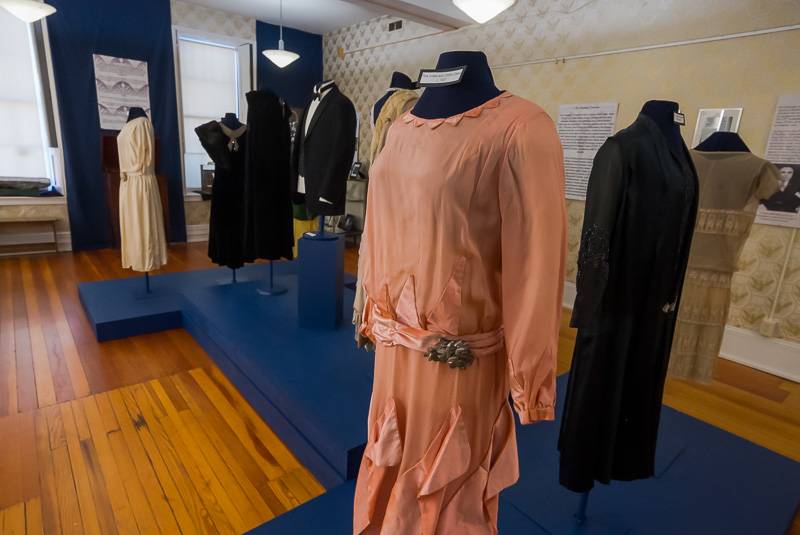
Experience what living in Genesee County in the 1920s’ was like and the commotion around January 24, 1925, the last time we witnessed the total solar eclipse in our area. Go back in time and see what people wore, what our community looked like, where people shopped and worked, their home lives, and how they saw and reacted to the eclipse.
The exhibit will feature clothing, newspaper articles, household goods, business and industry memorabilia, and much more from the 1920s.
A revamp of the exhibit will occur in January which will open on February 9, 2024, which will include even more artifacts and a greater experience of what 1920s Genesee County and Batavia looked and felt like.
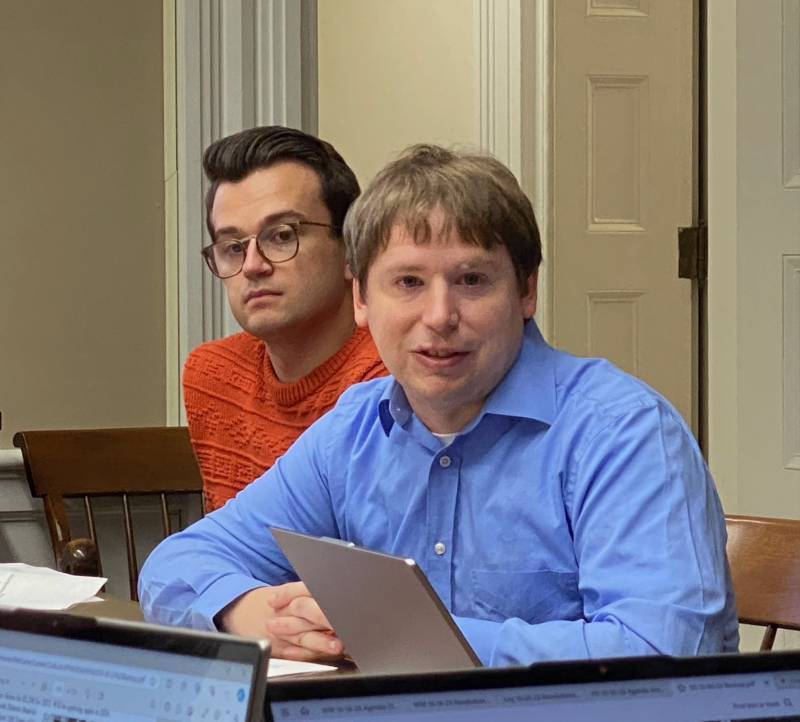
Holland Land Office Museum Director Ryan Duffy, front, provides an update, including his new full-time curator Tyler Angora, left, and reviews his annual report during a county Human Services meeting Monday. Photo by Joanne Beck
There’s an awful lot of new happening at the Holland Land Office Museum, a site meant to capture moments of historical weightiness.
A full-time curator; exhibits about the last complete solar eclipse in Genesee County, a vintage wedding dress collection and the 100-year anniversary of Batavia Concert Band; a monthly walk-up tour of the West Main Street site’s second-floor collections; a revised membership; and planning for a three-phase capital project are just some of the new items glossing up the old status quo, Museum Director Ryan Duffy says.
He brought new hire Tyler Angora to Monday’s Human Services meeting to introduce him as part of the novel happenings at Holland Land Office.
“Some time ago, there was a curator position. But that was before the museum. That was a completely different museum basically at that time, but Tyler is the first in a very long time … because we really wanted to take advantage of our wonderful collection. And we needed somebody with expertise in that particular field and who had some creative ideas in order to bring it out to the public,” Duffy said. “More so than anything I could do or volunteers, so we felt it was a major need. And it's already paid off dividends in terms of bringing our nearly 20,000-piece collection more to light.”
Angora, who lives in Brockport, is pursuing his master’s in history at Brockport State College. He began his role as curator in June, though he wears many hats, he said, as curator, collections manager, tour giver, and for jobs that entail “a bunch of different things.”
“But I'm solely in charge of the collection, I manage it, I take care of it, I present it to the public, I have to interpret it in a way for everyone to see it and enjoy it as much as we do. Since I've been there in June, I've really taken hold of that collections management. I have reorganized and redesigned the collection storage upstairs with Ryan to make it more accessible, to not only us to display but also accessible to the public,” Angora said. “That coincides with doing grander exhibits, like next year, we're reimagining the entire original structure of the building to really display the land office artifacts that we hold in our museum, but also the artifacts for our temporary exhibits like ’98 Years Since the Sun Went Out,’ which is the eclipse exhibit. So it'll be really exciting to break down pieces that haven't been on display for decades.
“I really focused on the fashion collection that we hold at the museum, which has been kept upstairs in a room by itself for a very long time. So we're really excited to start bringing that down and showing that off to the public because it's a really fantastic collection that spans over 300 years of clothing and physical history,” he said. “That is amazing. And we're hoping to do kind of behind-the-scenes stories next year to bring people upstairs into the collection. So it's been a big part of trying to make it accessible to the public. Because that's our goal.”
Going upstairs, that’s interesting. When will that begin? “So next year, about February is when the public will finally officially be able to go up into the collection on special tours with Ryan and I. On the first Friday of every month, they'll get a special tour upstairs and a special presentation from one of us,” Angora said. “And it's going to be really exciting to finally show off pieces that probably won't ever really be on display due to their fragility or their important significance to us. So that would be fun to show off to the public, especially next year when we reopen the museum in February and kind of redesign a lot of the spaces.”
What’s behind your passion in pursuing a master’s in history? He began at Brockport College as a business major in 2020 and didn’t really know what he wanted to do. He then met some key people in the History Department who got him involved with the Morgan House — “which I consider my home; it’s a museum that really holds a good place in my heart,” he said.
“And that's where it started, my love for museums, preservation objects, artifacts, all of that. And it transcended into me pursuing this kind of career path in museums. And I continued that into the GCM at the Genesee Country Village Museum with Brandon Brooks, the curator, where I worked with him with the Susan Green costume collection and really helped do stuff there. And I really got involved with preservation doing my own research,” Angora said. “So having this job and having Ryan as a co-worker is a lot of fun because he lets me just do whatever I want and kind of helps assist the collection in surviving for another over 100 years. So it'll be a lot of fun.”
Some recent history More than 5,000 people visited the museum since July 2022, and 65 percent of them were from outside of Genesee County. Visitors have come from more than 30 states and several foreign countries, including Canada, Indonesia, China and the Netherlands, Duffy said in his annual report to the county.
The museum hosted its 21st annual Wonderland of Trees in 2022 and 400 visitors during the season, plus a Genesee Symphony Orchestra opening night concert and three more for 50-plus attendees. The site served to educate and entertain with a guest speaker series on topics that varied from The Life of Joseph Ellicott and The Prison Guard’s Daughter to WNY in the Gilded Age to How Buffalo Got Its Name.
Volunteers, docents and interns completed more than 1,700 hours of community service, with a steadfast core of 25 volunteers.
The Museum’s board signed a lease with Genesee County to show occupancy and allow the pursuit of further grants. Duffy and Angora have each been writing grants, Duffy said.
“And between Tyler and I we can also apply for more grants on our own, as we each got two since this year, as well as the support from our grant writer Sara Pasti, who is looking at larger grants for the capital project,” he said. “And we're looking at smaller program and collections-based grants. But those, we can get a couple of those every year. They add up and allow us to do greater things.”
A first-phase capital project has begun with the development of plans for a new proposed West Wing addition adjacent to the parking lot. Included with that was the creation of fundraising and grant opportunities — to be written by Duffy, Angora and a county-hired grant writer —to assist in covering the large cost. That is to be a three- to five-year project, Duffy said.
The county had contracted with grant writer Sara Pasti to gain access to grants relating to the capital project of the West Wing entrance, as well as for other improvements to the museum outside the capabilities of museum staff.
Legislative Chair Shelley Stein asked Duffy if the “grant-writing support provided by the county” has been used to write the intended grant yet, and “we’re working on several grants, actually, towards this,” he said.
Overall, what can the public look forward to in the coming months? This go-round of a speaker series is to feature Civil War Letters of Rollin Truesdell, Grant’s Last Battle and Journeys to Authors’ Graves in Upstate New York, to name a few, plus history trivia and a membership that isn’t reliant on calendar year renewal. And that’s not even reviewing the collections, which Duffy and Angora are confident the public will enjoy.
“It won’t be the same old way, and it won’t be the same old museum. So if you haven’t been there in some time, you won’t recognize the place,” Duffy said.
“Even in the four months I've been there, it’s changed drastically,” Angora agreed. “We've redesigned exhibits that have been up for several years. Redone, permanent exhibits. We've added new items for the public to see. So just expect more indoor exhibits, new programs and more fundraising. We're really going to be everywhere next year, so we will be kind of a force to be reckoned with.”
On Wednesday, Nov. 8, from 11 a.m. – 2 p.m., the Anna Ingalsbe Lovell NSDAR chapter and the Holland Land Office Museum (HLOM) are collaborating on a special event to honor our Genesee County veterans and Vietnam War-era veterans.
All veterans plus 1 guest will have their entrance fees waived and will receive a small goodie bag; Vietnam War-era veterans, who have not yet been acknowledged by the Vietnam 50 Commemorative Committee, will also receive the DAR Certificate and an eagle pin.
Any military personnel, with an honorable discharge, who served during the Vietnam War era is eligible for the Award Certificate and eagle pin. Please pre-register your name and service for your Certificate. If you are unable to attend, please let us know by November 30 so we can arrange another time & date. Robin Laney Ettinger, a member of the NSDAR chapter, has created a limited-time email address for inquires – r.j.laney1@gmail.com.
The Holland Land Office Museum is proud to announce the next edition of its Guest Speaker Series on Wednesday, Nov. 1 at 7 p.m. The museum welcomes back Civil War historian and author Chris Mackowski, as he presents “Grant’s Last Battle.” The presentation details the difficulties that Ulysses S. Grant had as he wrote his memoirs near the end of his life, as he battled throat cancer. Admission is $5 or $3 for museum members. Please contact the museum at 585-343-4727 or hollandlandoffice@gmail.com if you would like to attend.
The Holland Land Office Museum is proud to announce the next presenter for our Guest Speaker Series on Tuesday, Nov. 7 at 7 p.m. Steven Huff will be presenting his newest work "Resting Among Us: Authors' Gravesites in Upstate New York." Steven Huff will make a PowerPoint presentation, and lead a discussion on the region’s literary gravesites, who the authors were, what they wrote, and why they are important. Copies of the book will be available for sale. Admission is $5/$3 for museum members. Please contact the museum at 585-343-4727 or hollandlandoffice@gmail.com if you plan to attend.
Join the Holland Land Office Museum for the next edition of our Trivia Night @ the Museum on Thursday, Nov. 9 at 7 p.m. This month's topic is the Cuban Missile Crisis. Trivia will take place again at GO ART! located at 201 E. Main St. in Batavia. Their Tavern 2.0 will also be open if you would like a beverage. Admission is $5 or $3 for museum members. Please contact the museum at 585-343-4727 or hollandlandoffice@gmail.com if you would like to attend.
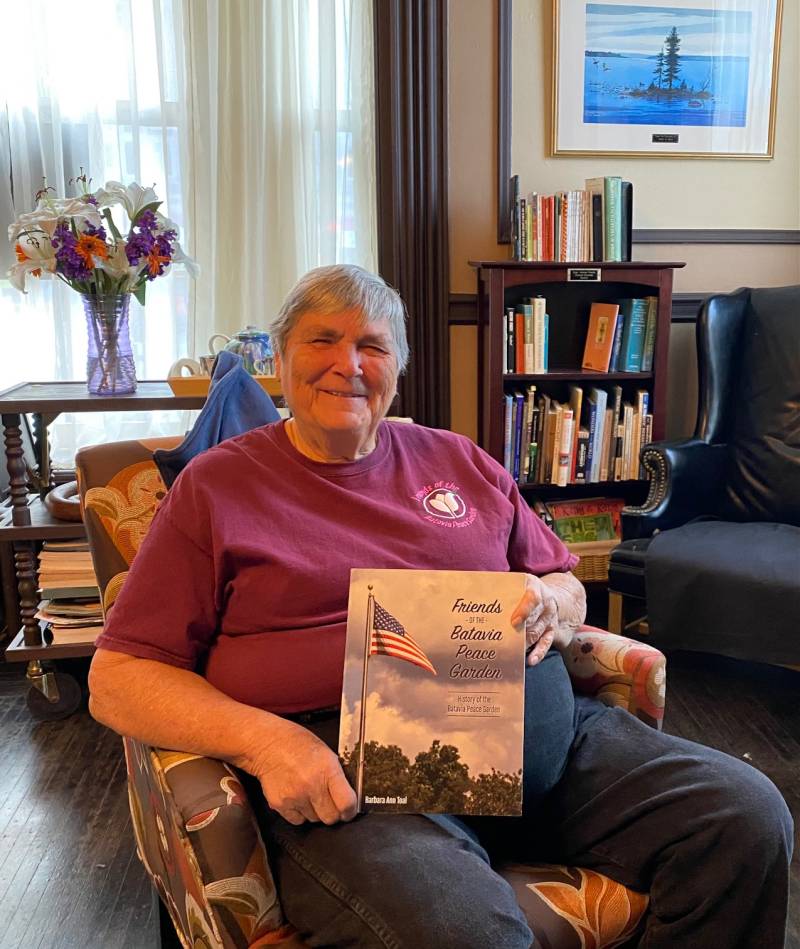
Batavia native Barb Toal with her book, "Friends of the Batavia Peace Garden," at GO Art!, where she will have a book signing from 6:30 to 8 p.m. Thursday. Photo by Joanne Beck
People kept asking Barb Toal what Batavia Peace Garden was all about, and it was too great a concept for her to explain, so there was only one thing for her to do.
Write a book about it.
“The story is too big to tell, you know, it’s too hard to explain to people what it’s all about in five minutes,” said Toal, co-founder of the garden nestled around Holland Land Office Museum on West Main Street in Batavia. “And lots of people were asking me to tell them a little bit here, a little bit there. And I finally said, you know, if we don’t start documenting this, nobody’s gonna know what this is all about.”
And the "Friends of the Batavia Peace Garden" was born. There will be a book signing event, with light refreshments served, from 6:30 to 8 p.m. Thursday at GO Art!, 201 E. Main St., Batavia.
The garden’s evolution began with Toal’s idea and the vision being outlined in paperwork in 2010. “We had to build the integrity of our organization,” Toal said, and earn the respect of the community, as those early members forged ahead with their plans to be on and in the grounds of the museum.
“And without this community, we could have never been in there,” she said. “This community is incredible. The people, the donations, and how they care about the families who care about the community are just amazing. Because every cent that has ever gone into that garden is from this community.
“All these years later, 13 years later, we got our first grant tool to enroll … to do the mural on the water tank, and the path to the second phase of the garden, because the first phase is completed and full. And the second one has partially started, and the third has been designed.”
Whoa, hold on there Barb Toal. Folks need to know much more about the beginning phase. After all, that’s why the book was written. They wanted to know what this Peace Garden stuff was all about, right?
It originated after Toal visited International Peace Garden founder Paula Savage at her home. Toal was watching footage of peace gardens on a laptop and saw one in Italy and then one in Ireland. As it happened, she had seen both of them in person during prior trips.
“I thought it was meant to be,” Toal said. “I bought into it. I wanted to get this garden put where it is, I fought like the devil. I wanted to get people to the museum. I was born and raised in Batavia and I wanted to show it off.”
Savage is also from Batavia, and “we both love our community” Toal said. She felt that Savage, with her International Peace Garden clout, could literally bring the idea home.
Savage came up with the idea for a garden in 1990 as a way to honor the United States and Canada as the only two countries in the world that shared the longest undefended border for more than 200 years, and her vision was accepted and installed in Washington, D.C. in 1991.
Gardens were then presented worldwide, first to Poland, and then Germany, and Hungary, and one by one, 20 countries honored one another by choosing the next one in line for an international peace garden as a token of goodwill and, of course, world peace.
There was the eventual development of a trail of peace gardens for the bicentennial commemoration activities for the War of 1812 along Lake Ontario and the U.S. and Canadian border, aptly named the Bicentennial Peace Garden Trail.
Toal had just retired, and Savage asked her to carry out a dream to create a memorial garden to honor their community. They both knew it would take “a large amount of creativity to connect world peace to our very own small hometown community,” Toal said.
An initial planning design phase began with a committee and volunteers, as they began to work toward their goals. Batavia became a site for an honorary International Peace Garden as part of the 400-mile War of 1812 Bicentennial Peace Garden trail from Buffalo to Plattsburgh.
There was a garden groundbreaking in 2011. The book captures much of the progress before and since then with lots of photographs of volunteers and people who were integral to it all coming to fruition. There were those first three paying members. A cool metal globe crafted and installed by local businesses. Dignitaries, a drum and bugle corps. Scenes of digging up the earth and planting future growth. Painting benches and placing bricks. Flying flags, hands in cement, and solemn ceremonies. The Statue of Liberty. Smiles and celebrations. Re-enactment demonstrations, tours, and lessons. Fundraisers, and hotdog sales. A new shed, and longtime old friends.
Now that the first phase has been completed, which includes a painted mural on the water tank, Phase II of a soon-to-be installed arbor at the entrance, along with flags for more countries joining in spreading world peace are in the works. The second phase will also include interpretive panels that members are planning to dedicate some time next June, she said.
A third phase not quite so mapped out as of yet, is to potentially connect the ongoing garden trail to the city’s plans to develop Creek Park property behind the ice arena, she said.
But for now, the book is on a shelf to tell the story that Toal wished to tell.
“Because everybody goes, ‘I know the flags are there, what are they there for?’ They don’t know. But each one of those countries has an actual Peace Garden in it. And then, you know, so every year or two, or however the board chooses, another garden is added,” Toal said. “So that’s why when we designed this, to begin with, we knew that the first garden would be full of the flags we had to start with. So for the next stage of the second phase … there are flags on hold to go in there. But we can’t do anything until we get all the permissions from everybody. And then we’d add a flag each year to add more countries of the world trying to make peace, the countries that are trying to work peacefully together.”
And rest assured, that garden members will continue to raise money to keep the effort going, from bricks and T-shirts to a seasonal hotdog stand, pins, and local flags. Even when they have a holiday get-together, board members pay their own way, she said, so as not to take money away from what’s to be spent on essentials for the garden.
“When you love what you do it makes life so much easier; it’s a labor of love, more than a chore,” Toal said. “And we take pride in the garden.”
Proceeds from the book will go to Batavia Peace Garden. They may be purchased at GO Art!, Oliver’s Candies, and Holland Land Office Museum in Batavia.
Come to the Holland Land Office Museum to see the first in a series of mini-exhibits focusing on materials and objects of our collection that have suffered from neglect and time. The Decomposing Past series will begin with textiles from Tuesday, Oct. 3 until Tuesday, Oct. 31.
The objective of this multipart exhibit series is to bring awareness to the importance of museum work and the preservation of the physical past. The first installment focuses on textiles and clothing across 180 years (1750-1930)!
Admission to the exhibit is included in regular museum admission. Along with the exhibit, our curator will be hosting a textile workshop on Oct. 21, discussing various preservation methods and various items housed in the HLOM Clothing Collection!
Join us at the Holland Land Office Museum for the first in our new series of "Decomposing Past" Workshops. The first will be on Saturday, Oct. 21 at 1 p.m.
This workshop will focus on antique textiles, and discuss various preservation methods of items within the museum collection. Our Curator Tyler Angora will share these methods in the hope that you can use them and understand the textile conservation practices on your own pieces.
Admission is $10 or $5 for museum members. This series of workshops is in conjunction with The Decomposing Past mini-exhibits at the museum.
Have you ever wondered how Genesee County came to be? What was the Holland Land Purchase? What is a Gibbet? How did Batavia get its name? If any of these questions peak your curiosity among many others, then volunteering at the Holland Land Office might be perfect for you.
The museum is reaching out to anyone with an interest in local history who would like to volunteer. Any amount of time that can be given is welcome, even an hour a week can make a great difference.
Volunteers can work in many different areas, and interests and strengths will be used to the most optimum effect. Areas of need include cleaning, gift shop, docent/tour guide, documenting of artifacts, exhibits and displays, landscaping, etc.
Volunteer hours would be during the normal hours of operation of the museum are Tuesday through Saturday, 10 a.m. to 4 p.m. The museum is also looking for volunteers for our various committees including, Marketing Committee, Collections Committee, Membership Committee, Wonderland of Trees Committee, etc.
If you have an interest in volunteering with the Holland Land Office Museum, please contact Director Ryan Duffy at 585-343-4727 or hollandlandoffice@gmail.com. Information can also be found on the museum’s website at www.hollandlandoffice.com.